GOPAL PUR ,04/07
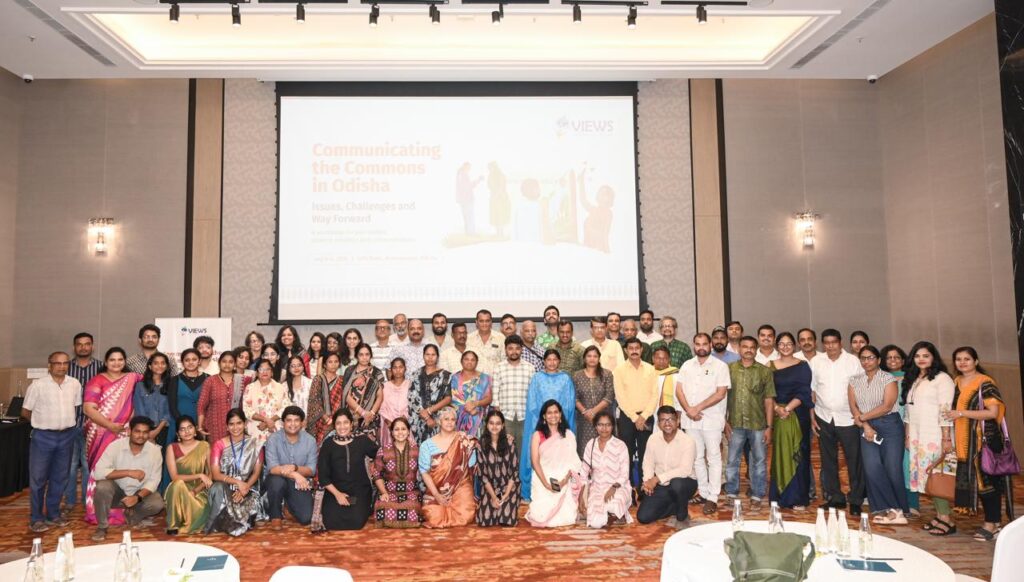
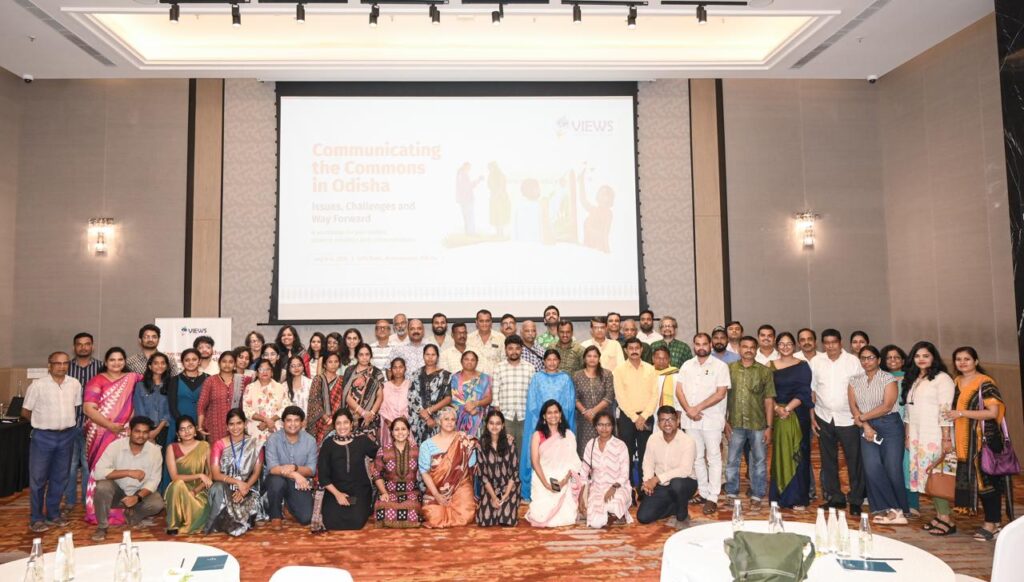
More than 100 communicators, community leaders, and
researchers convened at a two-day workshop – ‘Communicating the Commons in Odisha’ – on
July 3-4. They discussed how storytelling can be used as a tool to shape discourse on
Commons (forests, pastures, wetlands etc.) and support communities towards natural
resource management.
Anchored by grassroots organisation Voluntary Integration for Education and Welfare of
Society (Views), the event brought together national, international and hyperlocal
communicators, including writers, folk artists, illustrators and community radio broadcasters
reporting on shared natural resources. The communicators deliberated on how shared
ground-up narratives can be built around Commons governance, rural equity, forest rights,
and stewardship.
Stories discussed by the communicators weaved together ecological, cultural and governance
perspectives. The participants highlighted case studies and story ideas centred around
community-led solutions and systemic challenges. The workshop also included poetry
recitation, songs on coastal and cultural commons, and a performance by a sankirtan
mandali (folk artistes) who depicted a story on protecting their jal, jangal and zameen (water,
forest and land).
A ‘human library’ of community-led initiatives to safeguard Commons and how they have set
a precedent in protecting their natural resources in Odisha was also displayed at the
workshop. A resource kit for communicators called ‘Factsheet on Commons for Odisha
Communicators’ Workshop’ was shared with the participants for future reference.
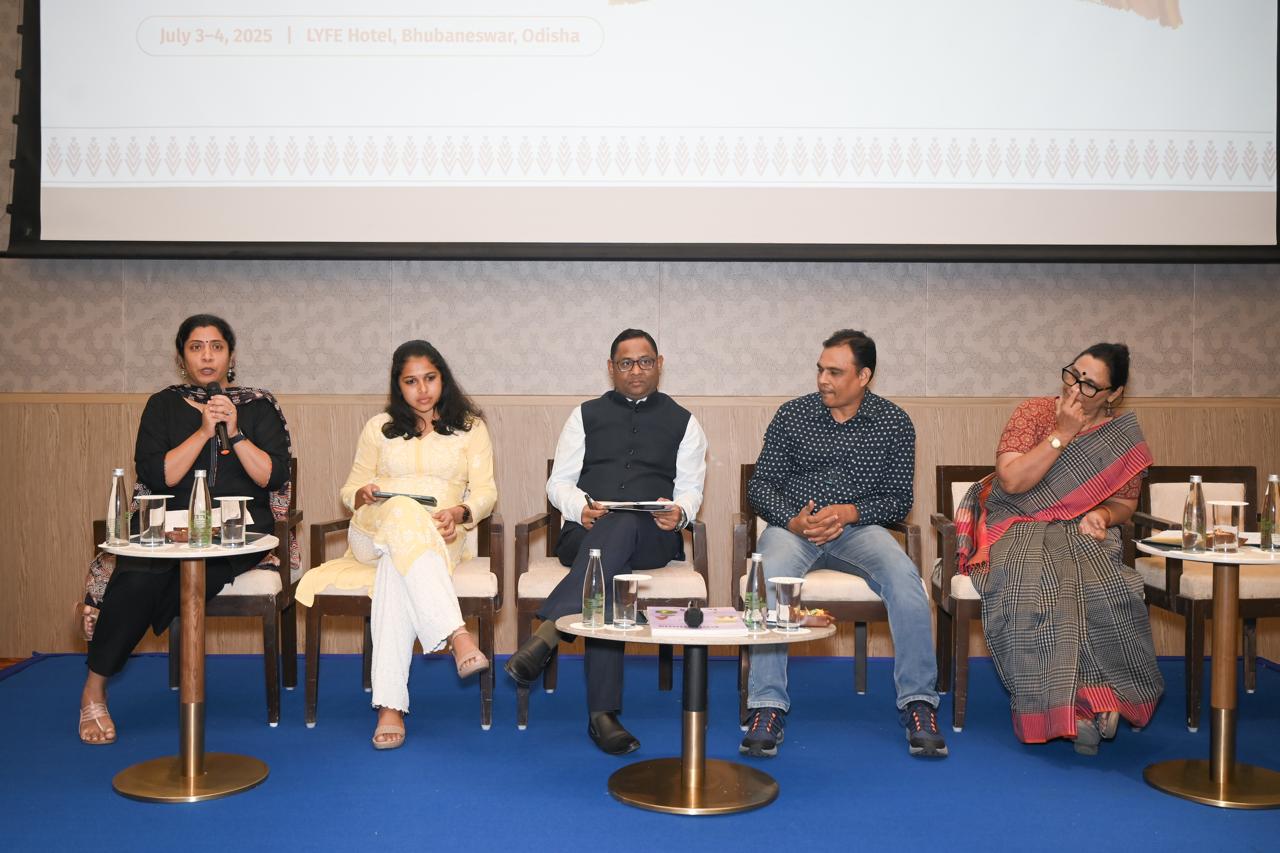
The workshop explored key dimensions of Commons through five thematic panels – the
importance of shared resources in creating livelihoods; the role of policies, panchayats and
community participation; Commons as culture and identity; Women’s leadership in protecting
shared ecosystems; platforming community leaders and their lived experiences.
Some discussions and data that emerged from the panels and presentations:
● Odisha holds 2.98 lakh ha of estuaries, 79,000 ha of the Chilika lagoon, 480 km of
coastline and 21,500 ha of mangroves. Inland Commons span 1.22 lakh ha of ponds and
tanks, 2 lakh ha of reservoirs, 1.8 lakh ha of lakes and swamps and 1.71 lakh ha of
rivers and canals.
● Odisha has endured 262 cyclonic disturbances in the past century, with Jagatsinghpur,
Kendrapara, Bhadrak, Puri and Balasore districts facing repeated exposure that strips
ecological buffers and disrupts local livelihoods. These mounting pressures reveal
weaknesses in existing response systems and highlight that disaster preparedness
alone is insufficient. Long-term climate resilience must hinge on safeguarding and
restoring the state’s Commons.
● An economic valuation study conducted in Odisha shows that land commons generate
average annual benefits of ₹65,411/ha from provisioning services, ₹60,698/ha from
regulating services, and ₹24,078/ha from supporting services, with cultural benefits
adding ₹4,456/ha. When scaled across the state, these ecosystem services are worth
roughly ₹36,890 crore a year, underlining that commons function as vital economic
assets and climate-adaptation infrastructure rather than residual land.
● Workshop participants highlighted three priorities: (1) secure community tenure by
fully enforcing laws like the Forest Rights Act and PESA so tribal and forest-dwelling
peoples’ rights over commons become real on the ground; (2) build
cross-departmental capacity and programme convergence—from block to state
level—linking agriculture, water, forest and rural-development schemes; and (3) adopt
a justice-centred approach to coastal commons, protecting traditional fishers’
(especially women’s) rights and local knowledge against extractive blue-economy
projects.
Key Takeaways from the workshop:
● Stories matter: Communicators, journalists and storytellers have a duty to surface
grounded accounts that capture the lived realities, wisdom and leadership of
Commons stewards.
● Bridging policy and practice: Such stories expose the real costs of inaction and
translate policies into tangible, relatable impacts.
● Shaping discourse: Authentic, place-based storytelling can steer public debate toward
more equitable and ecological futures.
● Collective journey: The Odisha Communicators’ Workshop launched a community of
practice committed to justice, resilience and shared stewardship in every story it tells.
The workshop also highlighted data and field insights led by Dr Sisir Kanta Pradhan (Common
Ground). Dr Pradhan explained, “Commons are not relics of the past; they are living
infrastructure worth tens of thousands of crores each year. Telling their stories with accuracy
and urgency is the first step toward safeguarding Odisha’s ecological and economic future.”
Talking about the importance of Commons, Sunita Muduli, former sarpanch, Koraput, said,
“When we protect our forest and water sources, we are not just managing resources, we are
exercising our right to govern ourselves. The Commons are not wastelands; they are our
lands, protected by our decisions, our customs and our collective care.
Additional expertise came from Ranjit Mohanty (Foundation for Ecological Security), Sanjoy
Patnaik (policy analyst), Subodh Patnaik (Natya Chetna), Subrata Biswal (eGov Foundation),
Abha Mishra (United Nations Development Program), Liby Johnson (Gram Vikas), Arun Mishra,
(retired Indian Forest Service officer), Madhusmit Pati (Nature Trust, Kendrapada) and
Sashiprava Bindhani (former State Information Commissioner).